Soil Management and Farm Mechanization Department (SM&FM)
Together, they function to provide support for crop production from land assessment for site selection to soil assessment for crop suitability
The Objectives of the SM & FM Department include:
- To create a National Digital Soils Database that is accessible to stakeholders through web-based geospatial applications.
- To provide accurate and timely Soil Diagnostic Data for decision makers.
- To produce soil amendments for improved productivity of marginal soils.
- To produce technical packages for year-round crop production in the protective environment of shaded hydroponics systems.
The Achievements of the SM & FM Department include:
- Houses a Digital Soil Database with 104 maps of all major agricultural areas in Guyana.
- Completed soil sampling for a National Soil Survey to update Guyana’s Soil Map.
- Retooling of the Soil Chemical Services Laboratory to provide analyses of all essential plant nutrient elements within 14 days of receipt of samples.
- The production and free distribution of rhizobia inoculant to legume producers.
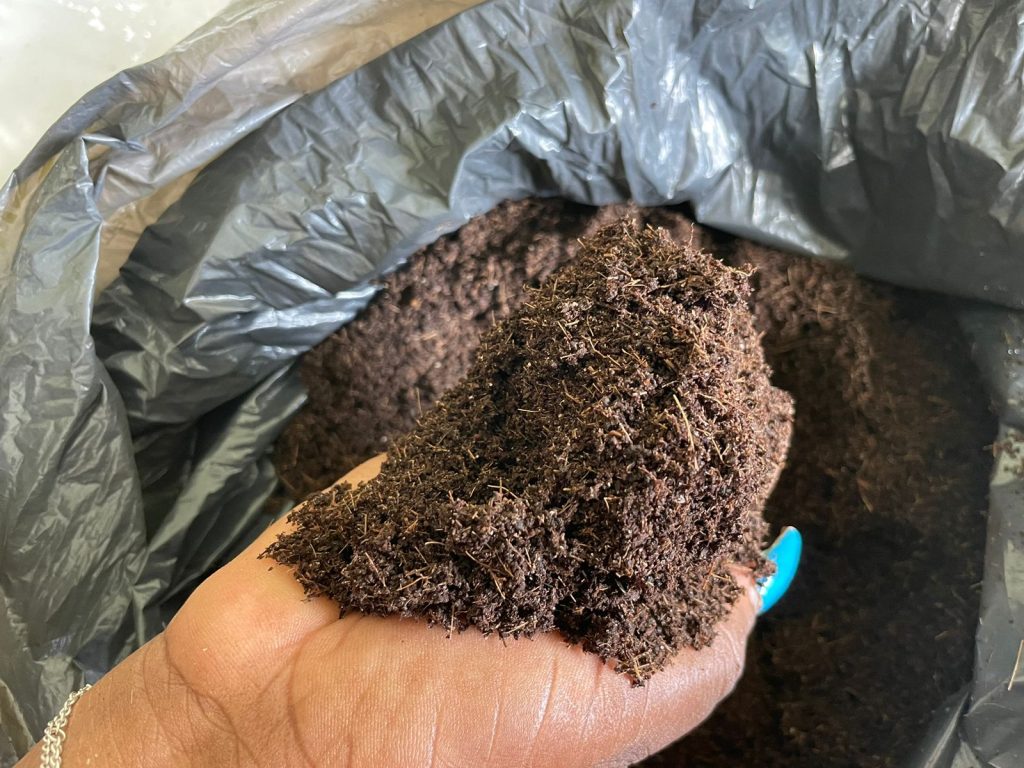
- The production of high-quality Seedling Soil Organic Waste Mixture (SSOWMIX) for healthy seedling production.
- Formulated biochar – bio-inoculants mixes for crop production on marginal soils.
- Created technical packages for all year-round crop production in a protective environment.
The Soil and Land Use Surveys:
Geographical Information Services (GIS) provides digital and analog (hardcopy) data on soils and land use to support site selection for crop production. GIS develops, manages, and disseminates geospatial information to enhance agricultural planning and sustainable land management in Guyana. These datasets include soil types, crop suitability, and soil limitation information, providing valuable decision-support tools for policymakers, researchers, extension officers and farmers.
The Soil Chemical Services Laboratory
Provides diagnostics on soils, tissue and water, with the determination of soil nutrients (Calcium (Ca), Magnesium (Mg), Sodium (Na), Potassium (K), Iron (Fe), Copper (Cu), Manganese (Mn), Zinc (Zn), Organic Carbon (OC), Organic Matter (OM), pH, Carbon dioxide, Bicarbonate, Carbonate, Electrical conductivity (EC) for salt toxicity, and Potassium Chloride (KCl) Acidity for Aluminum (Al) toxicity, and Vitamin C and glucose in fruits and vegetables. Recommendation for application of fertilizer, amendments, and actions to improve soil fertility are communicated to clients including farmers, entrepreneurs, students and researchers.
The Soil Physics Laboratory
Supports soils diagnostics with the analyses of particle size, moisture content, water holding capacity and bulk density. These analyses are essential for understanding the impact of soil texture and structure on water retention, drainage, on nutrient transport, plant growth and productivity.
Soil Microbiology Laboratory
Supports the use of beneficial soil microorganisms such as the rhizobia bacteria and the mycorrhiza fungi to enhance nutrient cycling, improve soil structure, and promote plant growth. This laboratory promotes sustainable agriculture by producing a rhizobia bacteria inoculant for use in legume production to reduce dependence on inputs of inorganic nitrogenous fertilizers; producing a soil mixture for vegetable seedling production using mycorrhiza fungi, that promotes plant growth and suppress plant pathogens; and produces biochar for use as a soil amendment in marginal sandy soils to improve water and nutrient holding capacity.
Hydroponics
Supports the cultivation of leafy and fruit-bearing vegetables using nutrient-rich water solutions instead of soil. This innovative farming method aligns with national priorities by promoting climate-resilient agriculture, improving production efficiency, and creating new opportunities for agri-entrepreneurship.
Hydroponics promotes sustainable agriculture, through efficient delivery of nutrients in solution, thus, reducing environmental impact of fertilizer application experienced in soil cropping systems; and through water conservation, by filtering and reusing water, reducing the volume of water used compared to open field cropping systems.
Focused is being placed on building capacity for the adoption of hydroponic technologies across Guyana. Established facilities in Regions 2, 3, 4, 5, 6, and 10 receive technical support to the benefit of farmers, educational institutions, government agencies, and developmental partners.